-
Lorem Ipsum
-
Page
1
of
6
1
|
2
|
3
|
4
|
5
»
-
27 Mar 2013

In the current issue of GCN a column by the magazine's Deputy Editor has created a lot of heat. Check out the comments under the article (or on Twitter or Facebook).
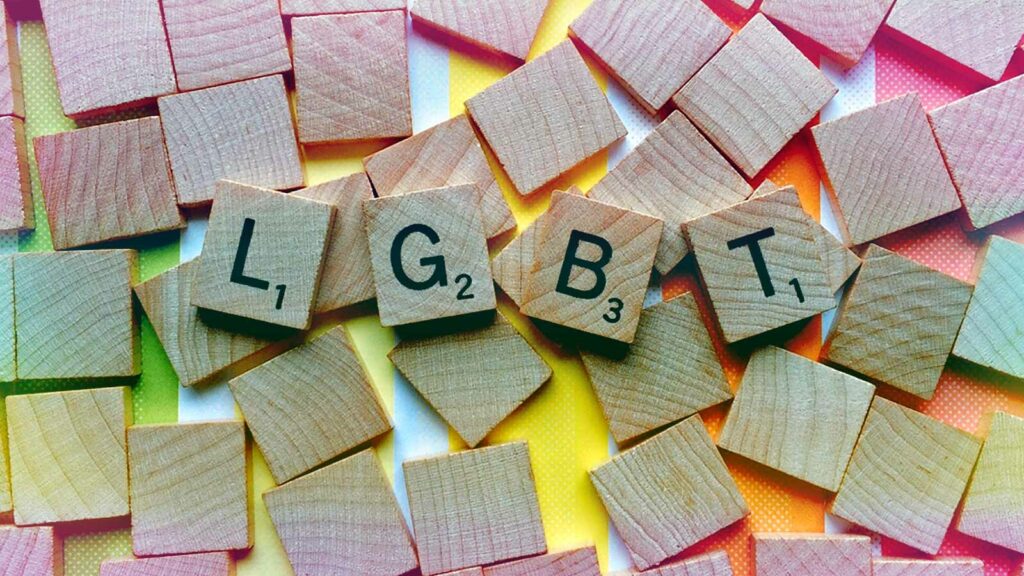
In her column, Ciara McGrattan argues that the "LGBT...QIA..." label has become too unwieldy and suggests that we should return to basics and simply use the term "gay". Along the way, she argues that trans folk, and bisexuals, and other groups should be excluded, unless they are currently sexually attracted to someone of their own sex, i.e. a trans lesbian is in, but a trans woman who is attracted to men is out.
As was to be expected, a lot of people have taken great offence and the editor of GCN has responded, defending the printing of controversial or difficult opinion - and attracting a lot more angry comment.
Which of course is fair enough. I think a large part of the offence comes from the fact that this was printed in GCN which is supposed to be a "safe haven" for our community - including it's trans members - so it feels a lot like a slap in the face to read within GCN someone arguing to exclude some of our community. And to make matters worse it's written by the magazine's Deputy Editor, and it's hard to argue that it's simply her personal opinion and not that of the magazine's when she carries that title.
But, you can also argue that GCN has fulfilled it's remit to provoke debate and an exchange of ideas. You'll have to take your pick!
On a personal note... I am abolutely happy of course to have our trans and bisexual comrades - and anyone else who doesn't fit the traditional sex or gender roles - under the same umbrella. I suspect it makes our community stronger, and while there may be differences in our struggles, there are enough common threads.
However, I do wish we could agree on a simple umbrella term. I think the ever lengthening acronym is confusing and off-putting to people outside our community. It makes our case a harder sell. But what the simpler umbrella term is...? Sheesh! Search me! I like "queer" but I know lots of people hate it. I was speaking at an event with Senator David Norris last week and in my speech I referred to him as a "queer warrior" and he hated it, lol! "Puff" or "fairy" he was fine with, but not "queer".
The other thing I sometimes wonder is if it actually serves the trans community well to put themselves under the broader sexuality umbrella, rather than fight their fight under their own gender umbrella? Is their hand strengthened by associating with a larger group with whom they share a natural affinity, or is their case weakened? Are their waters muddied, so-to-speak, by issues of sexuality rather than gender? I don't know. But it seems clear that the trans community has, in general, decided it strengthens their hand, and that being so, I'm certainly happy to have them on board. Being T is definitely a harder path to find yourself on than being L, G or B, so the last thing they need is to be excluded from our already diverse and rag-tag group just because the name is a bit of a mouthful.
gay politics
|
trans
|
gender
|
ideas
Comments
16
-
14 Feb 2013
I wish all the gays were this fabulous, but still, the gist is nice.
gays
|
videos
|
ideas
|
ads
Comments
1
-
19 Jan 2013
ideas
|
science
Comments
1
-
13 Dec 2012
This short documentary on young (in this case New York, but it's relevant here too) gays and gay identity touches on some of the things I was thinking about when I wrote the piece below for the November issue of GCN.
(thanks Brendan)
By the time you read this (barring some unforeseen event like Zayn from One Direction asking me to marry him in a hastily organised but tasteful ceremony) I will be enjoying the hot summer rays of Australia’s antipodean sun while you lot endure our bracing November. I’m off down under for almost a month, and first stop is Tasmania where I’ll be bringing my old-lady glamour to the 20th annual Tas Pride festival.
I’m performing at a number of events and what strikes me reading the programme of this festival from the very other side of the world, is not how exotic or foreign it seems, but rather how very familiar it all seems. There are club nights, a dyke night, cabaret shows, film screenings, a memorial service, a gay history walking tour, drag queen bingo, a river boat party cruise (just like Galway Pride), and of course a parade. Indeed, it’s not just familiar - it’s pretty much identical to our own Pride celebrations. Or Manchester’s or Paris’ or Stockholm’s or Boston’s, or Buenos Aires’s for that matter. Of course we’d expect to find much in common with a town in Australia, another English speaking Western democracy and former British colony, but Pride celebrations around the world are very similar to each other. I’ve been to the Pride parade in Tokyo and apart from the weather, the sallow skin, and the glossy black hair you’d be hard pressed to tell it apart from Cork’s parade. If I didn’t know better I’d swear I actually saw the very same drag queens. Or the same wigs at least.
Globalisation isn’t restricted to gay culture of course - more and more all around the world we eat the same burgers, we watch the same movies, we listen to the same Rihanna, and we wear the same skinny jeans we bought in the same Top Shop until it’s hard to tell Henry St from Foreign Street.
But arguably gay culture, and gay identity, is more globalised than even youth culture. This is hardly surprising. Gay culture as we know it (that developed post Stonewall, post liberation movement) appeared and developed in a modern world of jet travel, tv, and later the internet – the very agents of globalisation. My own first memories of being aware of a gay world outside my own small-town-Ireland are almost all from TV: glimpses of gay liberation in San Francisco on Whicker’s World, or swishy queens on British sitcoms. And as I grew older I read books like Larry Kramer’s Faggots which introduced me to a mind-boggling world of pre-AIDS gay hedonism, and as I got older still and started to travel I visited cities with vibrant gay communities and discovered drag queens in sequins and dykes in Birkenstocks and “clones” in work boots, and lipstick lesbians and hairy bears and all the other clichés and stereotypes that go into making a recognisable culture, an identity, that I and all the other Irish queers took home with us and created our own version, an Irish gay identity that’s more gay than it is Irish.
And it’s an identity I have embraced ever since - proudly, consciously, and when I was younger, with relief. Because in many ways, the previous labels that had been applied to me – Irish, culchie, middle class, Catholic, arty… - never felt comfortable on me. Sure, of course I was Irish, but I was never interested in most of the things that were considered essential to a young man’s Irishness – Gaelic football, Manchester United, U2… and at times I felt my very Irishness was called into question. Even my unusual accent, a product of my particular Irish upbringing, was a cause for suspicion. I often felt a kind of kinship with the dwindling Anglo-Irish Protestant community of my small town, because their Irishness too was often called into question because they didn’t tick all the arbitrary “Irish” boxes.
But no one ever doubted my gayness. Here was an identity that not only felt right, but was also one that I had found for myself and not had thrust upon me.
But embracing one’s gay identity so enthusiastically is sometimes derided by other gays, an attitude which seems to be becoming more prevalent. Ironically, one of the places you see it most clearly expressed is on gay dating websites like Gaydar or Grindr where it’s amazing how many men are eager to impress upon you that they just “happen to be gay” but “don’t make a big deal about it” and that “neither should you” if you are going to contact them ‘cos they’re just a “regular guy” and being gay “comes pretty far down that list” of important things about them, etc etc etc. In the bold new (old) straight-acting world ‘gay’ is not an identity to be proud of. It’s not an identity at all.
But I call bullshit. Your sexuality colours who you are every day, much more dramatically than, say, the accidental place of your birth. Sex is one of the driving forces of our lives and your sexuality influences everything about you, from how you interact with people to which movies you like. It’s influence is much more profound in a myriad of ways than your nationality. And yet, staking your identity on your Irishness is more acceptable than doing so on your sexuality.
But the truth is, for me anyway, I feel as gay as I do Irish. In fact, I often feel more gay than Irish.
And so what?
gays
|
ideas
Comments
6
-
20 Apr 2012
Yes it's half an hour long and this is the internet where that seems like an eternity, but it's John Cleese so you know he'll make it fun. And it's well worth a listen. Honest.
It appears to be from 1991.
(thanks Oisín/via)
people
|
ideas
Comments
0
-
28 Mar 2012
An interesting TED talk that suggests that because fashion has no copyright protection, it thrives, both creatively and economically, and other creative industries like film and music could benefit from following suit.
(Thanks Karim)
ideas
|
creativity
|
fashion
Comments
2
-
29 Feb 2012
I'm often in two minds about Banksy - or at least about the kind of status he has aquired. I like his work generally but sometimes I'm a bit cynical about the way his fun work gets elevated to "high art" and the ensuing squabbles over money and who owns what bits of whose wall etc.
However, sometimes I want to shake his had, for example after reading this spot on piece about advertising:

(via thisisnthappiness)
people
|
ideas
|
ads
Comments
1
-
11 Dec 2011
ideas
|
science
|
animation
Comments
1
-
25 Aug 2011
How it works and why it sucks. This short, interesting (and not at all boring!) video argues that rather than protecting and fostering creativity, the copyright laws we have now (the video is from a US perspective but applies equally) actually do the opposite and stifle creaivity.
legal
|
ideas
Comments
3
-
31 May 2011

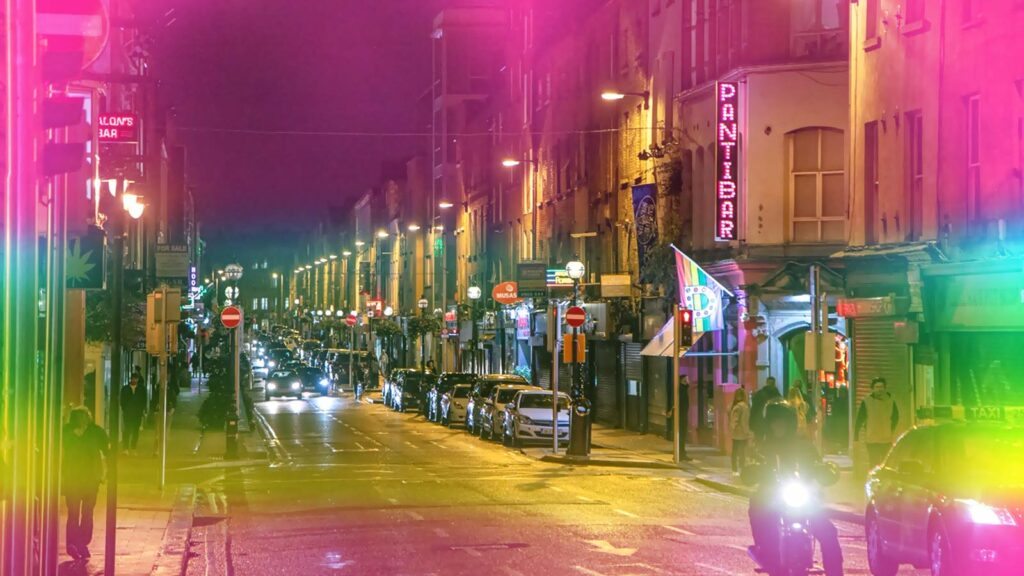
Thankfully I live ten minutes walk away from Pantibar, and from most other places i ever need to be. Yeah sure I have to step over drug addicts and negotiate my way through streams of piss at the weekend, but I couldn't bare to have commute a long distance. I have done it in the past and it is soul destroying.
Well, now it turns out that a long commute isn't just be soul destroying - it's a lot worse than that.
Long commutes cause obesity, neck pain, loneliness, divorce, stress, and insomnia.
ideas
|
infrastructure
Comments
0
-
Page
1
of
6
1
|
2
|
3
|
4
|
5
»