

-
Lorem Ipsum
-
Page
1
of
2
1
|
2
»
-
30 Aug 2011
If you are a fan of Haruki Murakami, The New Yorker has a new short story.

literature
|
books
|
people
Comments
0
-
16 Jun 2011

Today is Bloomsday so expect to se lots of people around Dublin wearing plus fours, carrying parasols, eating black pudding and banging on about lemon soap. And no doubt David Norris will be popping up all over.
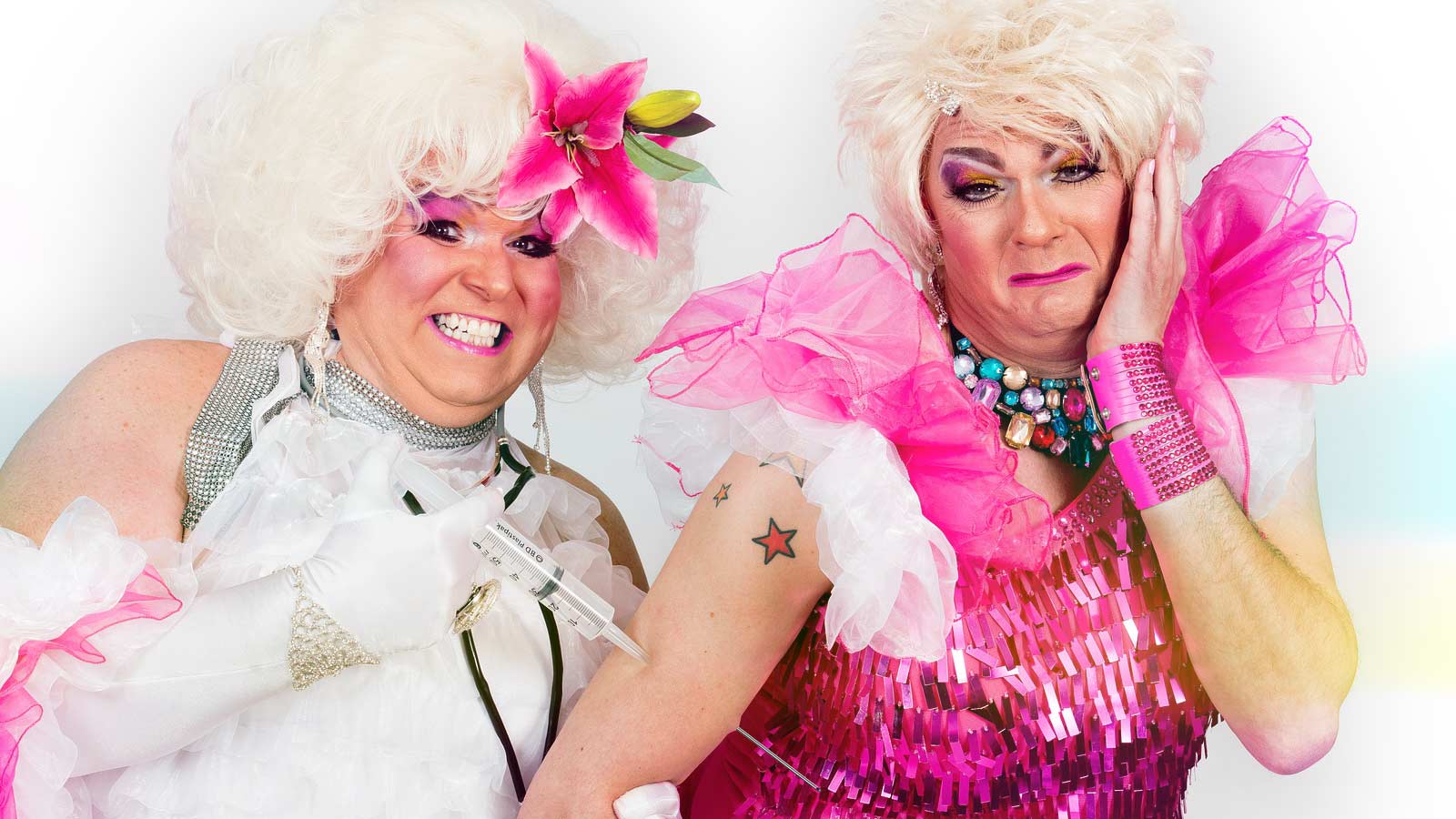
If you happen to be near St Stephen's Green at lunchtime, I'll be one of a large number of performers reading - and singing - from Ulysses at the bandstand in the park. I'll be on around one o'clock, playing a hallucinogenic transgendered brothel madame. As you do....
literature
Comments
0
-
13 Jun 2011

It's Bloomsday next Thursday, the 16th, and there are lots of events happening all this week celebrating James Joyce's Ulysses. One of the events on the day itself is Readings & Songs In The Green, at the bandstand in Stephen's Green from 11am to 2pm. Actor Alan Stanford will be acting as Master of Ceremonies as a varied line up of people read or sing songs from the book. The section I've been asked to read is a theatrical (and durrty) part where Bloom goes to a brothel and has an hallucinogenic, gender-bending, masochistic experience - none of which I'd know anything about of course. I'll be doing most of mine as a dialogue with the big-voiced Mr Stanford, a little after 1pm I think.

literature
|
people
|
personally panti
Comments
1
-
20 Aug 2010
This three year old kid recites Litany, a thirty line poem by Billy Collins (full text at the YouTube link). My first instinct was to wonder if this kid had been "hothoused" by overbearingly pushy parents, but what's really amazing about it is that the kid really doesn't seem to be reciting it by rote, but rather seems to properly understand what he's saying. And he seems to be enjoying it. His mother says in the YouTube info that "he loves poetry and he loves to memorize", so perhaps he's just a super bright kid who does indeed love poetry. And of course he's super adorable.
kids
|
literature
Comments
1
-
13 Aug 2010

Colm Tóibín writes an in-depth piece in the London Review of Books on homosexuality and the church. It's worth taking the time to read it in full.
Here's part:
There are very good reasons why homosexuals have been traditionally attracted to the priesthood. I know these reasons because I, as someone ‘confused about my sexuality', had to confront and entertain the idea that I should join the priesthood. In 1971, aged 16, I gave up my Easter break so I could attend a workshop for boys who believed they had a vocation.
Some of the reasons why gay men became priests are obvious and simple; others are not. Becoming a priest, first of all, seemed to solve the problem of not wanting others to know that you were queer. As a priest, you could be celibate, or unmarried, and everyone would understand the reasons. It was because you had a vocation; you had been called by God, had been specially chosen by him. For other boys, the idea of never having sex with a woman was something they could not even entertain. For you, such sex was problematic; thus you had no blueprint for an easy future. The prospect, on the other hand, of making a vow in holiness never to have sex with a woman offered you relief. The idea that you might want to have sex with men, that you might be ‘that way inclined', as they used to say, was not even mentioned, not once, during that workshop in which everything under the sun was discussed.
That you were gay was something you managed to know about yourself and not know at the same time. I am almost certain, for example, that when I was warned by a priest at school that a boy who had parted his hair in the middle had by this act given a sign that he was homosexual (the only time the term was mentioned in those years), the priest himself had no clear and open idea that he himself liked teenage boys. (He would spend time in jail more than 20 years later for abusing teenage boys.) He would have had a way, learned for good reasons in adolescence, of keeping some of his actions and desires secret from himself. His sense of power and entitlement would also have meant that such crimes as he committed would most likely not see the light of day. The priesthood had, as far as he was concerned, solved his problems for him.
This is almost an aspect of the Catholic religion itself, this business of knowing and not knowing something all at the same time, keeping an illusion separate from the truth. We knew that the bread and wine, for example, were literally and actually changed into the body and blood of Our Lord Jesus Christ by the priest at Mass, and, at the same time, we must have known that this was not the case, that, really, they remained just bread and wine.
The shame an adolescent felt about being gay in those years should not be underestimated; the feeling that you were less than worthy, that if people found out the truth about you they would despise you, went deep into your soul. This was another reason to become a priest. You could change your own powerlessness into power. As a priest, you would be admired and looked up to, you would spend your life - as so many Catholic priests have indeed spent their lives - doing good and being good. And being seen to be good, being needed by the sick and the dying, being wanted to officiate at weddings and baptisms and funerals, saying the sacred words which would mean so much to the congregation, all this would offer you a fulfilled and fulfilling life. Becoming a priest solved not only the outward problem of forbidden and unmentionable sexual urges, but, perhaps more important, offered a solution to the problem of having a shameful identity that lurked in the deepest recesses of the self.
This idea of knowing two things at the same time has been essential to gay people in other ways. Gay people have known that our sexuality was actually, despite what we read or were told, quite normal, quite natural; it was only the world that thought otherwise. While the world's view often ate into the self, there was another part of the self which remained intact, confident, sure. Introspection, the study of the self, for gay people became necessary, fruitful. The struggle between our knowledge and their prejudice often meant that a spiritual element in our being - something private, wounded, solitary and self-aware - had reason to come to the fore and seek nourishment in a close relationship to God. This is another reason so many gay men have become priests.
Gay liberation made its way, strangely, into the seminaries. I have a letter from a friend, an Irish writer, sent in response to a piece I wrote for this paper about the Ferns Report, describing his visit to an Irish seminary in the 1980s.[*] Since the Church was liberalising at that time, it would not have been unusual for writers to be invited to seminaries to speak. My friend had no intention of being shocking, or amusing. He spoke about literature, choosing the dullest subject for the seminarians. What he noticed among them, however, was anything but dull; and it surprised him greatly. He saw an immense amount of male fluttering; he listened as young candidates for the priesthood, boys from rural Ireland, attempted Wildean witticisms; he noticed them wearing specially tailored soutanes, moving around each other, excitedly, like a flock of girls. Here it was, and he was not the only one to witness it: ‘the takeover of the seminaries by homosexuals'.
But this was merely what it looked like. What such a seminary would have looked like a generation or two earlier, or indeed a century or two earlier, was as much an illusion as what my friend witnessed. Before the creation of a post-Stonewall gay identity and the presence of gay role models on television and in the movies, most gay men worked out a strategy, in early adolescence, to do a perfect, lifelong imitation of a straight man, to move around in that gruff, rangy way straight men had invented for themselves. For many homosexuals, the stereotype of the mincing, high-pitched queen was the most frightening idea that ever walked towards them. They hated it and feared it and worked out ways not to look like that themselves, or to be invisible when they did so.
religion poisons everything
|
people
|
literature
|
gays
Comments
15
-
31 Jul 2010

Anne Rice has announced on her Facebook that she is leaving Christianity, because she refuses to be anti-gay, anti-feminist, and anti-artificial birth control.
Rice was brought up Catholic, but left the Church at 18. However in 1998, she returned Catholicism, and though she has written about her difficulties with a lot of the Church's teachings on social issues, her's was a "born again" kind of return - lot's of Bible quotes and committing herself to Christ etc. Indeed, in October 2004, Rice announced in a Newsweek article that she would henceforth "write only for the Lord," and true to her word, her next two books were Christ the Lord: Out of Egypt, and Christ the Lord: The Road to Cana.
She remains a fan of Jesus, but has opted out of Christianity.


Now if she would just go back to being an atheist she might actually write something that someone cares about again. Hands up anyone who's read Christ The Lord: Out of Egypt. Anyone? No? Didn't think so.
people
|
books
|
literature
Comments
2
-
26 Jul 2010

Some time back, I posted a pic of the cover of this 1968 novel that I had come across randomly online, because it's about German-speaking, whip-carrying Nazi leprechauns, and like everyone else, I do love a Nazi leprechaun horror novel.
After I posted it, my dyke Caroline told me that she actually had a copy - she'd come across in a flea market, and obviously she bought it, because, well, because it's about German-speaking, whip-carrying, Irish Nazi leprechauns!
Over the weekend Caroline dug it out and gave it to me, which was very sweet of her, and I am now reading it aloud to Penny whose little heart is beating wildly in her little chest as she is "brought face to face with the unknown."

books
|
literature
|
ireland
|
fun
Comments
1
-
16 Jun 2010
I was asked to do a reading from Ulysses today in Meeting House Square as part of the Bloomsday celebrations, but I had to regretfully decline as I have another gig on this afternoon (never mind! I don't have to tell you everything!), but did you know that 'the author of Ulysses was a small, thin, un-athletic man with very bad eyes. When in the course of their drinking he ran in to any sort of belligerence, he would jump behind his powerful friend and shout, "Deal with him Hemingway! Deal with him!"'
people
|
literature
Comments
0
-
10 Jun 2010
Apple has a policy of not allowing sexual content on to it's iPhone and iPad apps, in an attempt to stop them becoming platforms for porn, which is fair enough - they can do as they wish. However, it appears that they are being bizarrely over zealous and are banning any form of nudity no matter how inoffensive.
Their latest target? A webcomic adaptation of Joyce's Ulysses, because of this panel which includes Mr Mulligan's crudely drawn meat'n'two veg as he dives into Dublin Bay.
Won't somebody please think of the Ulysses reading children?!

Here's a closer look at Mulligan's stew. Are you turned on?

How about now? Pervert!

literature
|
technology
|
really?
Comments
3
-
03 Jun 2010

It has long been rumoured that a recording was made of Oscar reciting a brief passage from The Ballad of Reading Gaol when he visited a stand dedicated to the inventions of Thomas Edison at the 1900 Exposition Universelle in Paris. A copy of the purported recording turned up in 1960, and was identified as the voice of Oscar by his then elderly son, though later again he cast doubt on it's authenticity.
The debate about it's authenticity continues, but you can make up your own mind about the scratchy recording HERE.
people
|
literature
Comments
0
-
Page
1
of
2
1
|
2
»